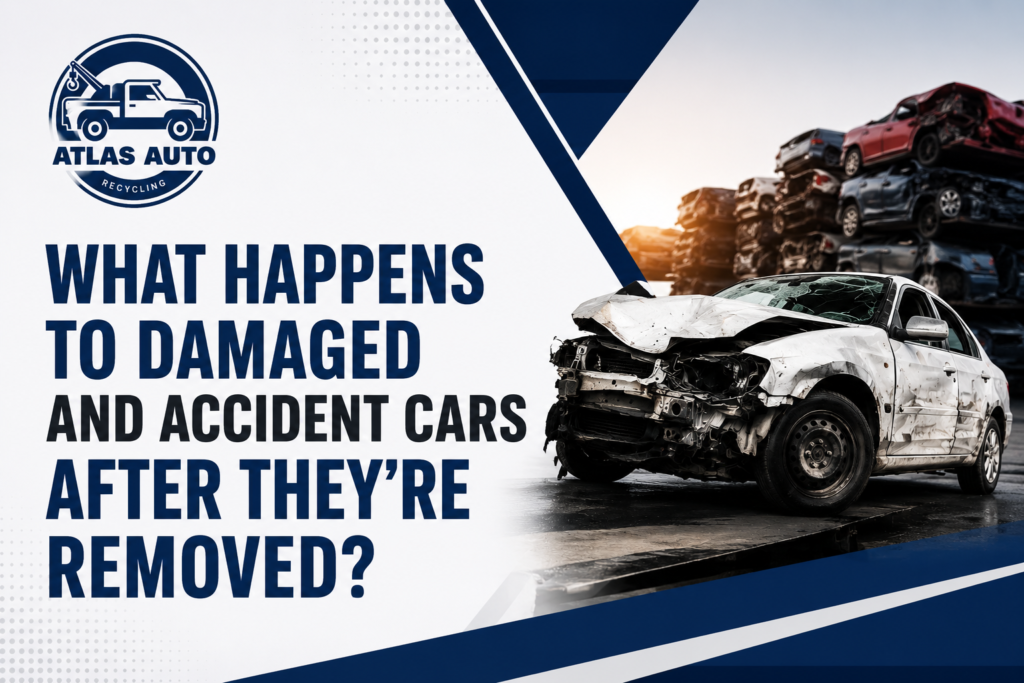
When a car has been badly damaged in an accident, repairing it may no longer make financial sense. In other cases, an older vehicle may have reached the end of its useful life because of mechanical problems, rust, or extensive wear and tear.
For Airdrie car owners, selling a damaged or accident vehicle for scrap can be a convenient way to clear unwanted vehicles from their property. But have you ever wondered what actually happens to the car after it is removed?
Rather than simply being thrown away, many damaged and unwanted vehicles go through a process that allows valuable parts and materials to be recovered and reused.
1. The Vehicle Is Collected and Transported
The first step is removing the damaged vehicle from its current location.
Accident cars may not be drivable, so specialized towing equipment is often required. A professional scrap car removal company can arrange pickup from a driveway, parking area, garage, or other accessible location.
Once the vehicle is safely loaded, it is transported to a recycling or processing facility for further assessment.
2. The Vehicle Is Inspected
After arriving at the facility, the vehicle can be assessed to determine what components and materials may still have value.
Even a severely damaged car can contain useful parts. Depending on its condition, these may include:
- Engines and transmissions
- Alternators and starters
- Wheels and tires
- Batteries
- Catalytic converters
- Doors and body panels
- Mirrors and lights
- Interior components
- Electronic and mechanical parts
The extent of the accident damage plays an important role in determining which components can potentially be recovered.
3. Usable Parts May Be Recovered
A damaged vehicle isn’t necessarily useless.
Some parts may still be in working condition even when the vehicle itself is no longer roadworthy. Reusable components can potentially be removed, inspected, and prepared for use in other vehicles.
This helps extend the useful life of automotive parts and can reduce the demand for manufacturing replacement components from new raw materials.
For vehicles with significant accident damage, the condition of individual parts can vary considerably. Components that are unsafe or too damaged for reuse are not treated as usable parts.
4. Hazardous Fluids and Materials Are Removed
Cars contain a variety of fluids and materials that should be handled properly during the recycling process.
These can include:
- Engine oil
- Transmission fluid
- Coolant
- Brake fluid
- Fuel
- Refrigerants
- Battery materials
Proper handling and recovery of these materials helps reduce the risk of spills and environmental contamination.
This is one reason why responsible vehicle recycling is preferable to simply abandoning an unwanted car or allowing it to deteriorate outdoors.
5. Valuable Metals Are Recovered
One of the most important parts of vehicle recycling is recovering the metal contained within the car.
Vehicles contain substantial amounts of steel, aluminum, copper, and other recyclable materials. Once reusable components have been removed and fluids have been dealt with appropriately, the remaining vehicle can be processed so that valuable materials can be separated and recovered.
These materials can then be used as raw material in manufacturing and other industrial applications.
6. The Vehicle Is Processed for Recycling
After the useful components and materials have been recovered, the remaining vehicle goes through further processing.
Large automotive components can be crushed or shredded, allowing different materials to be separated. Ferrous metals such as steel can be recovered using magnetic separation, while other materials can be sorted using additional processing methods.
This means an accident-damaged vehicle can have a second life in a completely different form.
The steel from an old vehicle, for example, doesn’t necessarily remain part of a car forever. It can eventually become raw material for other manufactured products.
Why Recycling Damaged Cars Matters
Responsible recycling keeps unwanted vehicles from unnecessarily occupying space in driveways, garages, parking areas, and storage facilities.
It also helps recover materials that would otherwise go to waste. Recycling metals reduces the need to obtain the same materials entirely from new sources and supports a more efficient use of existing resources.
For Airdrie residents, properly disposing of an accident-damaged vehicle can therefore be both a practical and environmentally responsible choice.
What Should You Do With an Accident-Damaged Car?
If your vehicle has been involved in an accident and the repair costs are too high, you may have several options. Depending on the vehicle’s condition, insurance situation, age, and remaining value, repairing it may not be worthwhile.
If you decide to sell it for scrap, start by getting a quote from a reputable scrap car removal company. Provide accurate information about the vehicle’s condition and let the buyer know if it is not running or has significant accident damage.
Before pickup, remove your personal belongings and any important documents from the vehicle. Having your vehicle and ownership information ready can also make the removal process easier.
Give Your Damaged Car a Second Life Through Recycling
An accident-damaged car may no longer be suitable for driving, but that doesn’t mean everything associated with it has to go to waste. Usable components can be recovered, hazardous materials can be handled properly, and valuable metals can be recycled.
For Airdrie car owners with a damaged, accident, or unwanted vehicle taking up space, professional scrap car removal can provide a simple way to move the vehicle on while contributing to responsible automotive recycling.
Atlas Auto Recycling helps vehicle owners remove unwanted and damaged cars and send them toward the appropriate recycling and recovery process.